 KOUSAI Bio Co., Ltd

恒赛生物KSD-101注射液获美国FDA再生医学先进疗法(RMAT)认定
8872026年3月24日,中国创新生物制药企业恒赛生物宣布一项重磅喜讯——其自主研发的原创树突状细胞疫苗(DC疫苗)KSD-101注射液正式获得美国食品药品监督管理局(FDA)授予的再生医学先进疗法(Regenerative Medicine Advanced Therapy, RMAT)认定,用于治疗复发或难治...
View detailsSearch the whole station
Hensel Biologics Italy - Milan
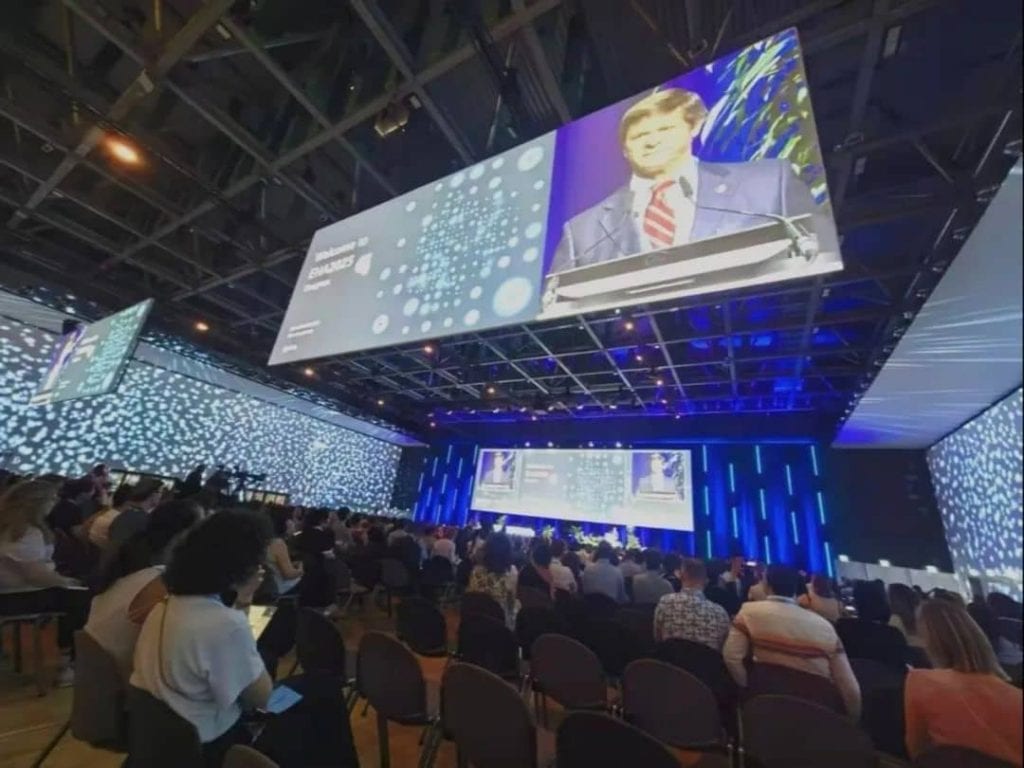
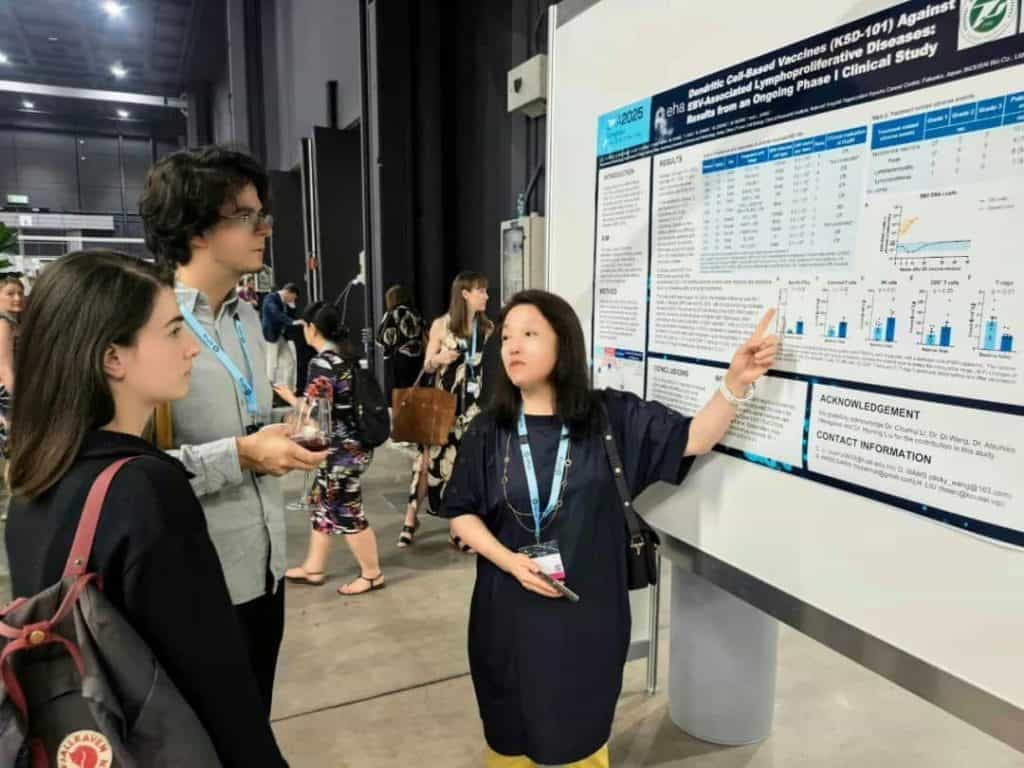
The 30th Annual Meeting of the European Hematology Association (EHA 2025) was successfully held from June 12 to 15 in Milan, Italy. As the premier global gathering in the field of hematology, EHA brought together world‑leading experts, scholars and industry pioneers to discuss the latest breakthroughs and future directions in the diagnosis and treatment of blood diseases.
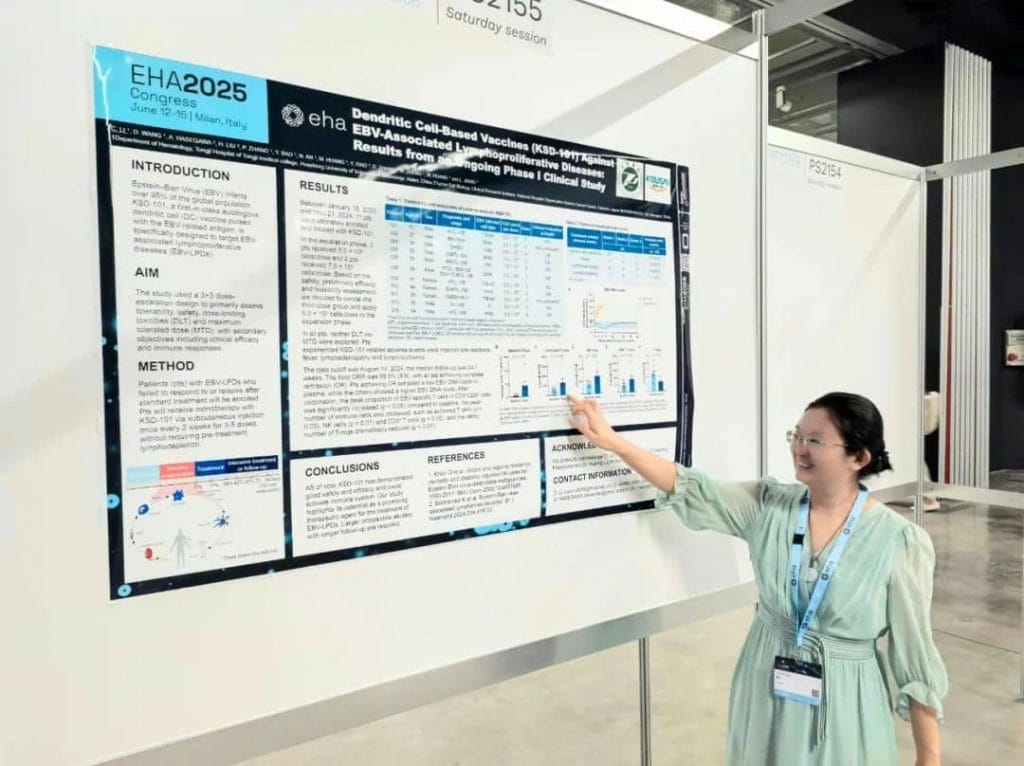
Amid this international academic feast, Kousai Bio, a distinguished representative of innovative biotechnology in China, took the spotlight for the second year in a row. The company presented the latest research results of its self‑developed core product – the Dendritic Cell (DC) vaccine platform KSD‑101. The positive data and unique therapeutic potential demonstrated across a range of EBV‑related lymphoproliferative disorders (EBV‑LPDs) attracted the attention of attending experts, underscoring the innovative strength of Chinese expertise at the forefront of immunotherapy for hematologic malignancies.
Confronted with the clinical challenge posed by type‑II Epstein‑Barr virus latent infection—characterized by pronounced immune evasion and a lack of standard therapies—Kousai Bio’s KSD‑101 platform shows great promise. At this year’s EHA, Kousai Bio presented data from its ongoing Phase I clinical trial, which enrolled patients with various EBV‑LPD subtypes, including angioimmunoblastic T‑cell lymphoma (AITL), nasal‑type/peripheral NK/T‑cell lymphoma (ENKTL), chronic active EBV infection (CAEBV), EBV‑associated hemophagocytic lymphohistiocytosis (HLH), diffuse large B‑cell lymphoma (DLBCL), and Hodgkin lymphoma (HL).
Excellent safety
Treatment‑related adverse events (AEs) were predominantly mild (e.g., injection‑site reactions, fever, lymphadenopathy). No grade ≥ 3 toxicities were observed, indicating good tolerability.
Established Recommended Dose
Based on trial data, the recommended Phase II clinical dose (RP2D) is set at 5 × 10⁶ DCs per administration.
Encouraging Preliminary Efficacy
At a median follow‑up of 42.7 weeks, the study demonstrated that KSD‑101 treatment led to notable disease remission, with the majority of patients achieving complete remission (CR) that was maintained over time.
Validation of Immunological Mechanism
The study observed that LMP2‑specific CD8⁺ T‑cell responses peaked at week 6 post‑vaccination, accompanied by a decline in EBV DNA levels and a significant reduction in regulatory T cells (Tregs), strongly supporting the mechanism of action of KSD‑101.
The core breakthrough of KSD‑101 lies in its innovative design concept:
1.Overcoming HLA restriction and antigen singularity: Autologous dendritic cells are loaded with EBV‑related tumor composite antigens, enabling effective presentation of multiple viral epitopes, including LMP2 and EBNA1, thereby markedly expanding the scope of immune recognition.
2.Inducing potent, synergistic immune responses: The design simultaneously activates CD4⁺ helper T cells and CD8⁺ cytotoxic T cells, aiming to generate a more comprehensive and powerful antiviral and antitumor immune response.
3.Immense platform potential: The underlying technology is highly extensible, providing a solid foundation for future expansion to other virus‑driven malignancies such as HPV‑associated head‑and‑neck cancers, HBV‑related liver cancer, KSHV‑associated hematologic tumors, and more.
The clinical data led by Prof. Li Chunrui of the Department of Hematology, Tongji Hospital (affiliated with Tongji Medical College, Huazhong University of Science and Technology), sparked strong interest among international clinical experts at the EHA meeting. Kousai Bio’s team engaged in active discussions with specialists from Europe, the Americas and Asia on the progress of KSD‑101, its therapeutic‑indication potential, immune‑mechanism exploration, preliminary efficacy and safety data, and future clinical development directions
Dr. Liu Huining, Founder and Chief Scientific Officer of Kousai Bio, and Mr. Chen Wei, Business Director, led the core team at the conference. Leveraging this global platform, the company consulted top worldwide experts on KSD‑101’s future development strategy, clinical‑pathway optimization (based on the RP2D identified in Phase I), and potential international collaborations. Kousai Bio is committed to accelerating the global development of this China‑originated therapy so that patients worldwide can benefit
Kousai Bio consistently upholds a “patient‑centered” philosophy, focusing on unmet clinical needs in virus‑associated tumors. Ongoing development and optimization of the KSD‑101 platform—particularly its favorable safety profile and early efficacy signals—represent a pivotal step in translating basic mechanistic discoveries into clinical value. Going forward, Kousai Bio will continue to invest in next‑generation immunotherapy products, expand its global partnership network, and integrate innovative outcomes into the worldwide health system, contributing Chinese strength to the reshaping of cancer treatment.
Kousai Bio, driven by innovation, aspires to become a global pioneer and catalyst for precision immunotherapy in oncology.

2026年3月24日,中国创新生物制药企业恒赛生物宣布一项重磅喜讯——其自主研发的原创树突状细胞疫苗(DC疫苗)KSD-101注射液正式获得美国食品药品监督管理局(FDA)授予的再生医学先进疗法(Regenerative Medicine Advanced Therapy, RMAT)认定,用于治疗复发或难治...
View details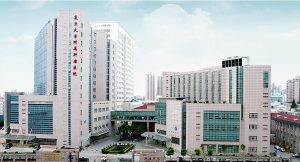
On October 21st, 2025, the Cancer Hospital of Fudan University held a kick-off meeting for the project "KSD-301 in combination with AG regimen (Gemcitabine, Albumin Paclitaxel) for the treatment of locally advanced unresectable pancreatic cancer". The project is led by Prof. Xianjun Yu, President of the Affiliated Cancer Hospital of Fudan University and Director of the Institute of Pancreatic Tumor Research of Shanghai and Fudan University, as the principal investigator, and the investigational drug KSD-301 is Hengsai's...
View details Recently, Hengsai Biologics completed the first round of strategic financing, exclusively invested by Tianshili Capital. This round of funding will be mainly used to promote the R&D and clinical trials of the core pipeline as well as the company's internationalization strategy layout. Both parties have carried out extensive and in-depth communication and planning on domestic and international project cooperation. In the future, they will give full play to their respective business advantages, with equity investment as the core link, through business synergy,...
View details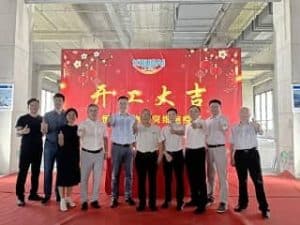
Kousai Biological Dendritic Cell Vaccine Drug Production and Research Project Groundbreaking Ceremony Successfully Held
View details